



The Mork Family Department: Energy, Materials and Information
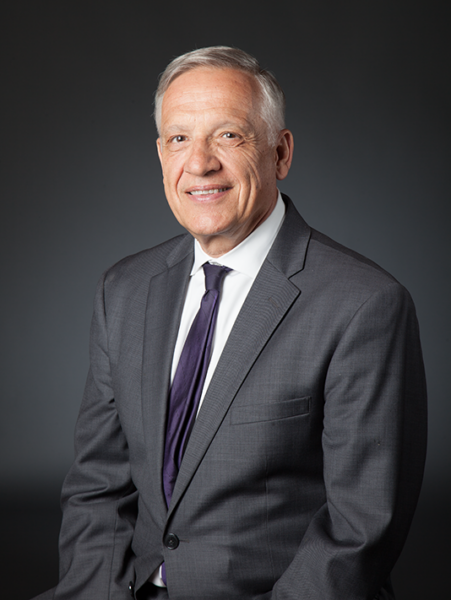
When I first joined USC — yes, in the latter part of the last century! — Joe Goddard, the then-department chair of chemical engineering and now UCSD professor emeritus, told me that engineering is about three general areas: energy, materials and information.
At that time, three distinct USC academic departments — chemical engineering, materials science and petroleum engineering — were involved in teaching and research about energy and materials, with mechanical engineering and electrical engineering-electrophysics addressing other key elements of both.
The enthusiasm of youth led me to seek, as I started my academic career, a truly joint appointment, in both chemical engineering and petroleum engineering, at 50% in both — a step that I never regretted, but in retrospect, one I would not recommend today! And since I mentioned Joe, I should also fondly bring back the memory of the late Lyman Handy, then the chair of petroleum engineering and a wonderful academic and human mentor.
During the years that elapsed, we witnessed the extraordinary progress of technology, which combined the synergy of the above three areas with the spectacular advances in electronics to usher in our modern era of convergence, whose future is unfolding with a hard-to-imagine acceleration. This relentless path left its academic imprints on the evolution of disciplines. Starting in the latter part of the 1980s, the USC departments of chemical engineering and petroleum engineering merged into one.
I witnessed its birth from the very beginning.
And in the fall of 2005, added to that mix was the Department of Materials Science, to form the Mork Family Department of Chemical Engineering and Materials Science, in recognition of John Mork, USC petroleum engineering alumnus and later the chair of the USC Board of Trustees, and his wife, Julie, and their family.
MFD, as we now call it, has blossomed in its multiple offerings over the past 20 years since its founding, addressing key aspects of energy and materials, now fueled even more powerfully by information technology in its various forms, including AI in particular.
Like other academic entities, MFD embodies a convergence of disciplines fundamental to the future. Materials and their application empower structures, microelectronics, quantum information technologies, health and medicine, security, new energy sources and sustainable prosperity. Energy in its many manifestations is increasingly needed at an unprecedented scale to power the fast unfolding of an AI-based world. Materials for clean and sustainable energy — from hydrogen to nuclear to decarbonization — and the application of critical and rare earth minerals are essential to that future. And so are materials related to space transport and exploration.
At the USC Viterbi School, such efforts are fast underway and combine outstanding strengths in MFD along with the Department of Aerospace and Mechanical Engineering (AME), the Mann Department of Biomedical Engineering, the Astani Department of Civil and Environmental Engineering, and, of course, the newly founded USC School of Advanced Computing. It is somewhat ironic that the matter of energy supply and its aspects (sort of a ho-hum matter just a few years ago) has now taken, again, one might add, a crucial role for the future. A role that is even more critical when one realizes the need for energy sources that will ensure the sustainable prosperity of future generations.
And this is where the third subject in Joe’s exhortation to a young assistant professor, namely information, comes screeching to the front.
AI and its fast-growing branches are changing at an extraordinary speed the way we teach, share and advance knowledge. MFD has embraced this power for some time now, including pioneering work on the materials genome, quantum materials, information processing and the use of AI and machine learning (ML) in fundamental work in chemical and biochemical engineering. With the future being reborn in ways that bring questions never asked before, academic leadership will be challenged with a constant need for ingenuity, adaptability and clarity of thought and ideals.
As we celebrate the 20-year history of MFD and acknowledge the generosity of the Mork family, we look forward to shaping the future with the advancement of human values to keep engineering a better world for all humanity, a task increasingly more important for all.